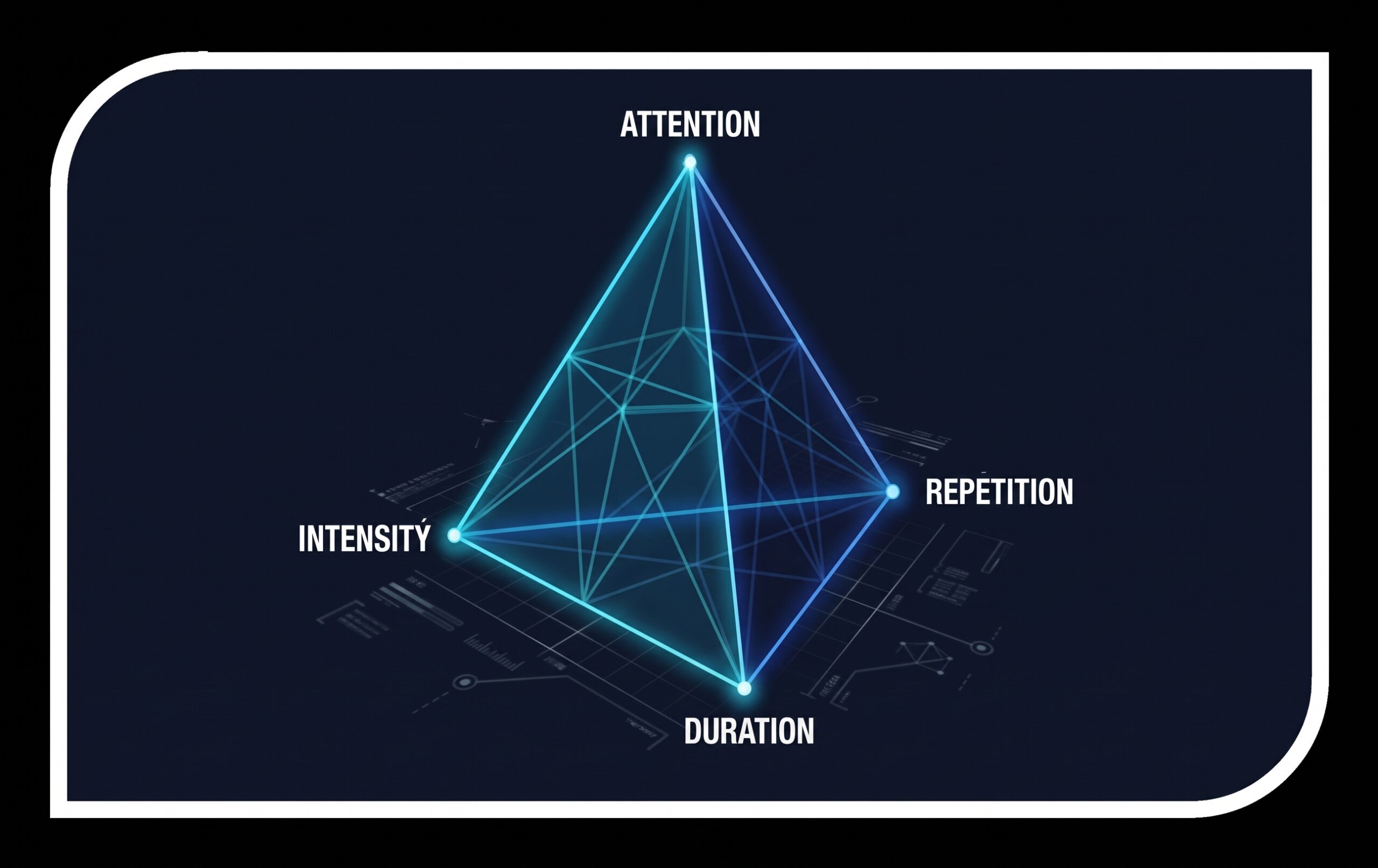
The Mental Energy Accumulation Formula (HH-OS Core)
System Priming — Attention as Fuel and Emotion as Amplifier
« The system does not validate what is true; it installs what is energetically charged. »
For a signal or transient thought to transform into a stable background program, it must first receive an ignition charge. This priming phase relies on the first two forces of the Tetrahedron:
• Attention (The Entry Point): Attention is the system’s primary energy resource. Without attention, no energy circulates, and the thought vanishes instantly without a trace. Directing attention toward a subject is equivalent to initiating a data download into the machine’s working memory.
• Emotional Intensity (The Amplifier): Emotion is not a mysterious state of mind; it is raw somatic variance acting as a voltage multiplier. A strong emotional charge (such as fear, anger, or high excitement) instantly increases signal saliency. The Kernel interprets this physical tension as a survival emergency and doubles the resources allocated to its processing, allowing security locks to be bypassed in record time.
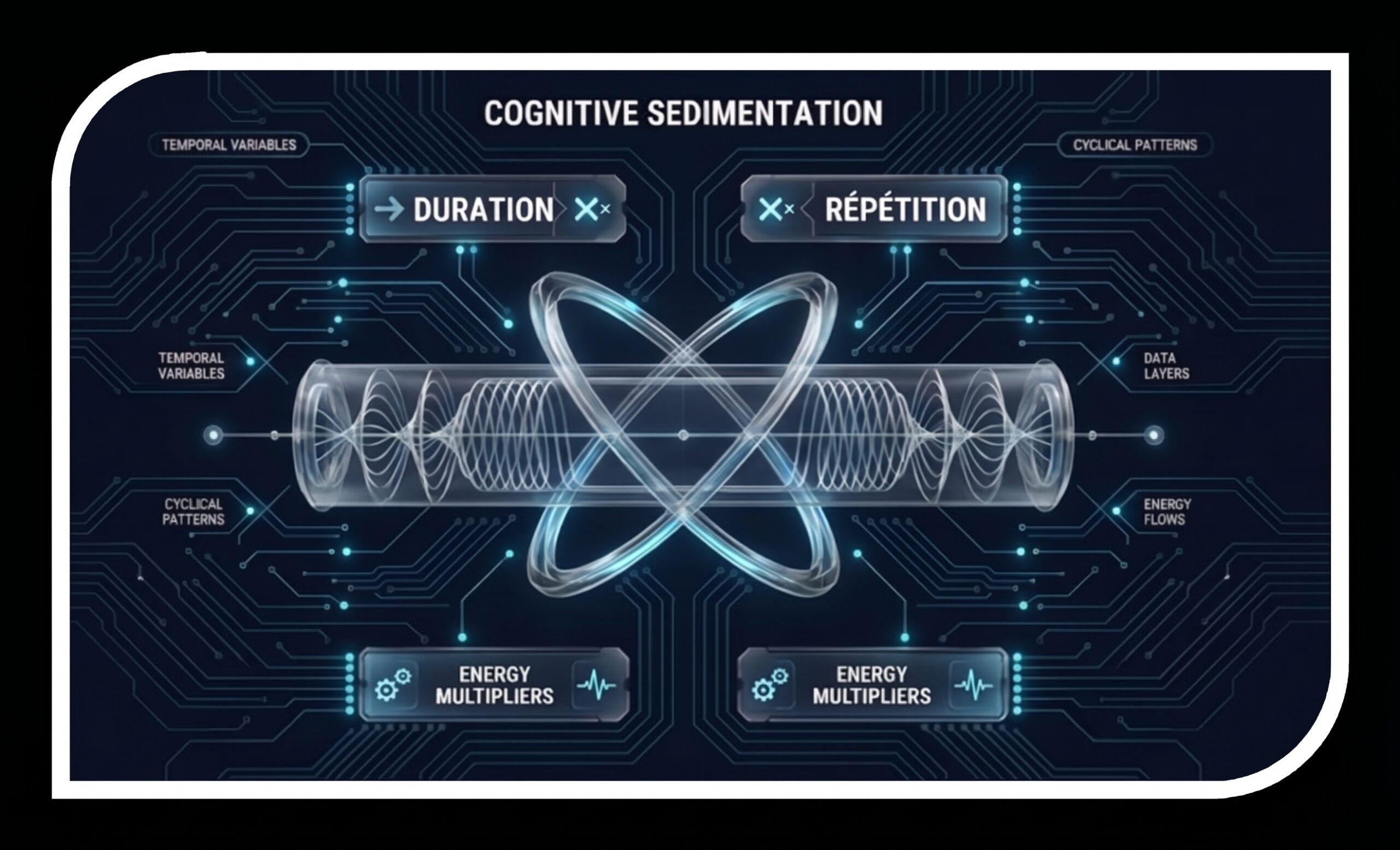
Temporal Sedimentation — Focus Duration and Repetition Frequency
« Low tension repeated daily consumes more bandwidth than an isolated shock. »
Once a thought is primed, its permanent installation as a background routine is determined by its exposure to the time factor. This is the role of the Tetrahedron’s two stabilizing forces:
• Duration (The Maintenance Gauge): The longer the system remains focused on the same mental simulation (rumination, anticipation scenario, or imaginary conversation), the fuller that thought’s energetic accumulator becomes. Duration locks attentional RAM onto a single task, preventing the somatic device from cooling down.
• Repetition Frequency (The Default Path): Each return of attention to the same subject acts as a newly confirmed line of code. Even if emotional intensity is low, frequent repetition creates a background habit. Out of a concern for biological efficiency, the brain paves a neural highway: the signal becomes so familiar that the associated application launches faster and more automatically, without any voluntary decision.
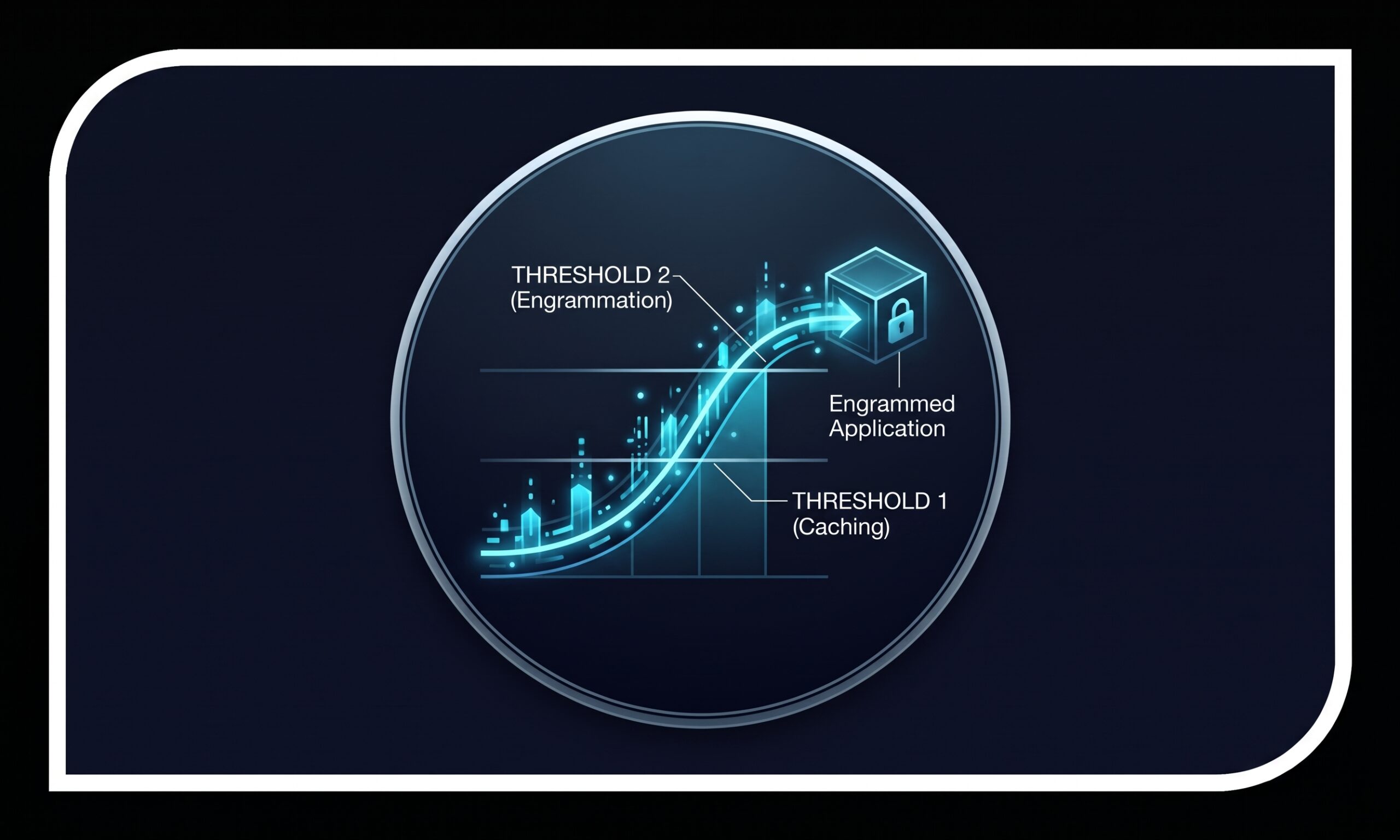
Phase Transition — Threshold Crossing and Program Somatization
« The installed program executes in the background and produces its physical render, whether you want it to or not. »
The Validation Tetrahedron demonstrates that no limiting automation is a manufacturing defect. It is the mathematical consequence of accumulated forces:
• The First Threshold (Caching): When the combined input of attention, intensity, duration, and repetition reaches a critical initial level, the thought is cached in memory. It becomes highly available in the short term, but can still be erased if attentional power supply stops.
• The Second Threshold (Engramming): If the power supply continues, the second threshold is crossed. The Kernel creates a stable prompt, generates the execution scenario, and installs the mental application into long-term memory. From this moment on, the program executes autonomously. Faced with a trigger, it produces an immediate somatic render (clenched jaw, knot in the stomach, accelerated heart rate). You are no longer driving: the system faithfully executes the routine you validated and fed in the past. Becoming a Webmaster means identifying these 4 forces of the tetrahedron to cut the power supply before the engramming point.